Beyond first line therapy
About OCD
OCD is one of the most commonly occurring mental health disorders. It affects about 2% to 3% of people in Western general populations. It is characterised by recurring intrusive thoughts that are very hard to prevent or control (the obsessions).
It is not an understatement to say that there is a tremendous amount of room for improvement for an effective and sustained treatment for OCD, especially for those with severe or debilitating conditions that are resistant to first line drugs and/or CBT. The erratic and often unsatisfactory results from first line therapy are the principal reasons that researchers continue efforts to identify promising new drugs and maximise the effectiveness of those currently available.
What Is OCD?
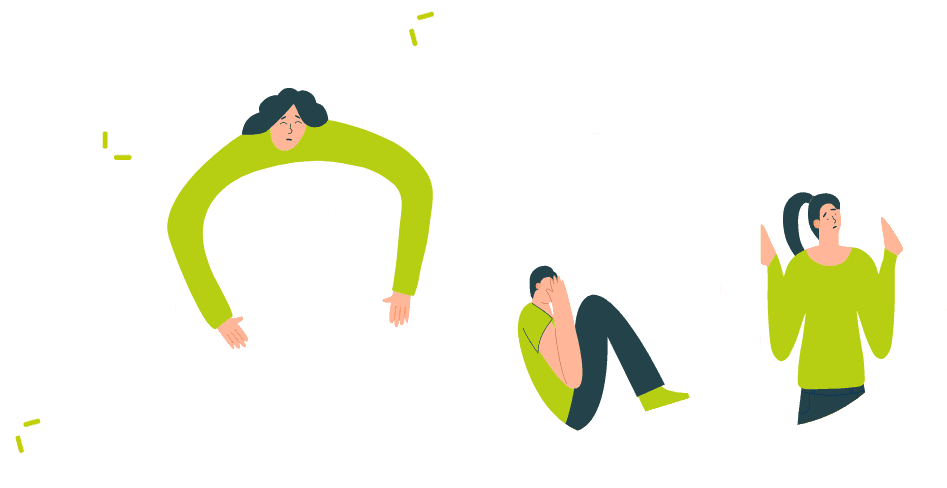
These lead to irresistible and recurring behaviours (the compulsions or rituals). Compulsions are actions taken to negate or resolve the disruptive, anxiety provoking and disturbing thoughts. A familiar example are those individuals so fearful of “contamination” from everyday activities, such as using a keyboard, touching a doorknob, or handling a notebook, that they feel compelled to scrub their hands with soap and water or a disinfectant many dozens of times a day and despite raw skin from the cleansers.
Other unwanted obsessive thoughts can have more disturbing and aggressive themes. Intrusive thoughts/obsessions/compulsions may occur so frequently that they disrupt personal relationships, work, sleep and almost all other aspects of daily life.
Many people experience troubling, unwanted thoughts occasionally. However, in those without OCD, these thoughts are given little importance, do not necessarily compel any actions, and easily disappear. By comparison, in those with OCD, the thoughts or impulses are intense, relentless and can cause tremendous anxiety, guilt, and disgust.
The themes of the intrusive thoughts in people without OCD may be quite similar to those occurring in OCD. It is not necessarily the nature of the obsessive thought that defines OCD, but rather how that thought is interpreted and acted upon by the patient.
Regrettably, OCD is usually a lifelong condition that waxes and wanes in intensity and frequency. Treatment can help manage the obsessions and compulsions, so that they are less disruptive. However, existing treatments for OCD are often ineffective, which is why we are pushing for the development of new and better treatments for this devastating condition.
At least 25 drugs have been tested or used for OCD treatment. Most of these are reserved for those patients with poor responses to first line therapies although the evidence supporting their effectiveness is often conflicting or insufficient. In the opinion of many experts, the combination of psychotherapeutic interventions with multi-drug therapy is more likely to be effective in patients with severe OCD.
There also are non-drug treatments that have attracted attention. These include nutrient supplements, plant and herbal preparations, acupuncture, and alternative psychosocial interventions. For patients who do not have satisfactory results from numerous drugs and CBT, brain stimulation treatment methods are also presented.
FACTORS THAT MAY PLAY A ROLE IN FAILED TREATMENT
DRUG TRIAL AND ERROR
If optimal first line drug and/or behavioural therapies are not adequately effective, most specialists will prescribe second line treatment. Despite the large number of comparative drug studies done in groups of patients, no second line therapy (such as the combination of an atypical antipsychotic with an SSRI or similar drug) clearly emerges as a treatment of choice. The process of identifying the best treatment for a single individual frequently requires some trial and error.
DURATION OF DRUG TREATMENTS
Most of the drugs used for OCD require periods of as much as 12 weeks before the effect can be judged. It has been shown that as many as one-quarter to one-half of patients taking first line OCD medications will fail to complete the necessary period of treatment. As a result, there is a risk that a particular treatment may erroneously be considered evidence of failed therapy. A frequently cited reason for treatment discontinuation is the occurrence of intolerable side effects.
RELAPSING OCD – OTHER FACTORS
For those patients who fail various drug therapies, it is appropriate to consider other possible, and controllable, factors that might escape the attention of those who recommended treatment. Those occurring more commonly include erratic follow though of the ERP homework that is part of therapy, drug noncompliance or self-adjustments, or an unrecognised degree of anxiety. Some patients with more severe OCD may also develop a degree of skepticism about new treatment recommendations after several treatment failures. The depression that frequently coexists with OCD may also set the stage for non-compliance with treatment recommendations.

DRUG CLASS: ATYPICAL ANTIPSYCHOTIC DRUGS (AAP)
AAP USE IN OCD
Drugs in this group are used to treat several serious psychiatric disorders. These medications, also referred to as neuroleptics, are in a class of compounds that can bind to dopamine receptors without triggering any downstream responses, therefore blocking the action of excess dopamine in OCD sufferers.
The use of atypical antipsychotics as an augmentation therapy for SSRI resistance has been extensively tested with generally favourable results. In one of these studies, the addition of aripiprazole (ARI) to a SSRI or clomipramine resulted in better treatment responses. It is not clear from other individual studies which of the atypical antipsychotics, other than ARI, have satisfactory outcomes and drug side effect profiles. Several investigators have addressed this issue by pooling data from multiple antipsychotic treatment studies (using meta-analysis). These reports confirmed the positive results from ARI treatment and several additional atypical antipsychotics. These comparative analyses also showed that outcomes do improve with risperidone, quetiapine, and olanzapine. Although the reported results vary, as many as 60% of treated patients may have significant improvement.
When considering an AAP as add-on therapy in the face of poor SSRI responders, consideration also should be given to ERP, especially given the combined risks of SSRI and AAP side effects. In a well-designed study comparing the addition of risperidone or ERP to an SSRI, there were significant improvements with both. This was most evident during the first 8 weeks of treatment, and the improvements were stable or even slightly improved with both over six months.
AAP SIDE EFFECTS
Many of the side effects of AAPs are similar, although the risks and degree vary considerably. ARI has demonstrated comparatively fewer serious side effects. These include lower risks or no risks of elevated lipids, sexual dysfunction, weight gain, diabetes, sedation, and drop of blood pressure when standing.
Like all drugs and remedies described, information about the common and less serious side effects are readily available from drug package inserts or by way of a simple search on the Internet. Since the incidence of more serious side effects also varies among these agents, both the side effect risks, and effectiveness of these drugs should be taken into account when considering drug options. A potentially serious but uncommon side effect is a heart rhythm abnormality.

Table 2. Comparisons of side effects from atypical antipsychotic drugs frequently used for OCD treatment*
| AAP | Brand name | Weight Gain | Nausea Vomiting | Dizziness | Sexual Dysfunction | EPS 6 | Drowsiness |
|---|---|---|---|---|---|---|---|
| aripiprazole | Abilify | + | ++ | + | + | ++ | ++ |
| olanzapine | Zyprexa | +++ | + | ++ | ++ | +++ | ++++ |
| quetiapine | Seroquel | +++ | + | ++ | + | ++ | ++++ |
| risperidone | Risperdal | ++ | +++ | ++ | ++++ | +++ | ++++ |
| ziprasidone | Geodon | + | + | ++ | + | + | +++ |
* The indicators range from “+” = minimal to none up to “++++” which is at least a 30% risk
AMISULPRIDE & D-CYCLOSERINE (SEROMYCIN)
Amisulpride is discussed separately since it shows promise as an AAP in OCD, but is as yet understudied and not a mainstream OCD drug. It is highly specific for certain dopamine receptors and blocks dopamine signal transmission. It is not currently available in the US, but is approved in the UK and throughout mainland Western Europe.
The most commonly observed side effects included weight gain, mild sedation and asthenia, and like the other AAPs, there is an increased risk of developing extreme side effects. Sexual side effects were infrequently observed.
SPECIFIC NEUROTRANSMITTER MODULATORS
There is rapidly growing interest in the use of drugs that specifically target neurotransmitters in several distinct ways. Several show promise for OCD treatment and, in general, their side effect properties are quite modest.
D-CYCLOSERINE (SEROMYCIN)
D-cycloserine appears to alter neurotransmitter function in a manner that accelerates extinction learning. Extinction learning, or conditioning, occurs when a stimulus for a particular action (such as an obsession) is not followed by the conditioned response (the compulsion). Extinction learning is a fundamental part of ERP therapy.
Although clinical research studies of D-cycloserine have been mixed, some show that the combination of ERP and D-cycloserine results in at least a doubling of the rate of improvement compared to ERP alone and may be considerably faster in the early part of ERP treatment. However, although treatment with D-cycloserine may accelerate progress, it appears that untreated ERP patients eventually “catch up” with the treatment group. There is little to no evidence that D-cycloserine significantly enhances the effectiveness of ERP. Rather, it appears to enhance extinction learning thereby enabling the patient to more quickly improve and, perhaps, even shorten the required duration of the ERP treatment course. Current guidelines from the American Psychological Association include the recommendation that to be an effective adjunct for ERP, D-cycloserine should be administered not more than 2 hours before ERP; little to no treatment effect is seen if it is given 4 or more hours before ERP.
MEMANTINE (NAMENDA), RILUZOLE (RILUTEK) & OTHER DRUGS
Memantine’s principal action results in suppression of glutamate activity. Several studies of the addition of memantine to SSRI have shown generally favourable responses in one-third to two-thirds of treated. Preliminary findings suggest that adjunctive memantine shows considerable promise in SSRI treatment resistant patients. The frequency and type of reported mild side effects did not differ between patient groups, suggesting that memantine might be better tolerated in patients intolerant to other agents.
RILUZOLE (RILUTEK)
Riluzole is another glutamate-modulating drug for OCD that affords significant symptom improvements in about half of patients whose OCD was not controlled with SSRI treatment. As with most of the other drugs used to treat OCD it is, as yet, unknown why some patients respond to specific drugs and others do not. This also is why drug trial and error for treatment-resistant patients is highly advisable for those whose symptoms continue to be distressing.
UPDATE ON OTHER DRUGS
Among other drugs of several classes that have been used to treat OCD, several have attracted interest. Although limited in scope and still preliminary, current information about patients and /or data from recently completed clinical trials follows.
TOPIRAMATE (TOPAMAX)
This drug is an anti-seizure medication and is also used for bipolar disorder and the prevention of migraine headaches. The use of topiramate as an add-on treatment for OCD is based on several of its actions that result in diminished glutamate activity and increased GABA actions. There are, however, conflicting results from several recent controlled studies. Also, troublesome side effects include influenza-like symptoms, difficulties with memory, and distorted taste sensation. It is also worth noting that the average treatment time until full drug effect may take several months.
LAMOTRIGINE (LAMICTAL AND OTHER BRAND NAMES)
Lamotrigine is an anti-seizure drug and mood stabiliser. Its actions result in decreased glutamate levels and interference with glutamate neurotransmission. It has been used successfully in bipolar disorder. Reports of lamotrigine as an effective add-on treatment for OCD show mixed results. Side effects were observed in 5% to 20% of the patients. These were generally mild and transient, and included sedation, fatigue, headache, and skin rash.
The optimal OCD lamotrigine doses remain unclear, although higher doses may result in better responses. Given the levels of overall improvement generally observed, and its modest side effect profile, lamotrigine appears to merit consideration when other drugs are ineffective.
ONDANSETRON (ZOFRAN)
This drug is mainly used to control nausea and vomiting, especially when associated with cancer chemotherapy, radiotherapy and other conditions. The interest in ondansetron as a possible OCD drug is due to its actions that result in reduced nerve transmission by dopamine. As an augmentation agent, several uncontrolled studies showed, at best, only modest improvement from the addition of ondansetron to an SSRI.
Common side effects seen with treatment include headache, constipation, and abdominal pain. The high doses of ondansetron that have shown efficacy in clinical trials also increase the possibility of long QTc heart arrhythmias in at-risk patients.
GRANISETRON (SANCUSO, GRANISOL)
Although granisetron has actions similar to ondansetron, it differs in its ability to cross readily from the blood into the spinal fluid that bathes the brain. There appears to be only one study of granisetron in moderate to severe OCD in which one group of patients received granisetron and fluvoxamine and another fluvoxamine alone for eight week. At the end of the study period, a significant and substantial percentage of those receiving granisetron had complete responses (35% or greater reduction of Y-BOCS scores) and remission (Y-BOCS score 16 or less). More modestly improved scores were also seen in the fluvoxamine-only group.
BRIEF MENTIONS
PREGABALIN (LYRICA)
This drug stimulates GABA production, thereby inhibiting glutamate release. Several case reports and case series have demonstrated improvement of OCD symptoms when combined with an SSRI with or without an atypical antipsychotic, suggesting a possible role for this drug in patients with resistance to multiple drugs. To date, however, recommendations would be very premature and based on insufficient data.
PINDOLOL (VISKEN AND GENERIC EQUIVALENTS)
A member of the beta-blocker class of medications, pindolol is primarily used to treat high blood pressure. It also promotes the release of serotonin in the brain, which is the basis for its inclusion in this report. Several small case studies have shown a statistically significant but rather modest improvement of Y-BOCS scores. Although its side-effect profile is very modest, any estimation of effectiveness in OCD treatment regimens needs considerably more study.
LITHIUM (LITHOBID, LITHANE)
Lithium is one of the principal drugs used for mood stabilisation in patients with mania and bipolar disorder. Lithium interacts with neurotransmitters in several complex ways, and results in reduced availability of dopamine and glutamate, the stimulatory neurotransmitters, while increasing GABA levels. Based on this mechanism of action, lithium has been evaluated for OCD treatment. Much of this interest comes from reports of improved OCD-like symptoms in bipolar disorder patients taking lithium. However, at least two clinical trials failed to show any clinically significant improvement using add-on lithium for patients with primary OCD. There is no convincing evidence to support its usefulness as OCD add-on treatment, and further raises the question of whether the OCD symptoms associated with bipolar-disorder, and those in primary OCD, occur as the result of different or unrelated mechanisms.

THE INTERNET AS A CBT RESOURCE
There is no question that the proper use of CBT is a key part, and in some cases the only necessary part, of OCD therapy. However, there are longstanding obstacles that interfere with efforts to access CBT. Among these are the limited availability of appropriately trained therapists, costs of therapy, time requirements, and therapist availability and response times.
Given the extent of problems with access to conventional therapy, and with no solution in sight, clinician-investigators have pursued alternative treatment methods that have both clinical and cost effectiveness.
Over the past few years use of the Internet as a vehicle to administer CBT has progressed from a mere idea to a robust new area of investigation. The methods used to conduct remote CBT, with or without drug therapy, continue to evolve and increasingly show promise as an alternative to face-to-face therapy. The feasibility and apparent effectiveness of internet-based CBT (iCBT) has already been demonstrated in other psychiatric conditions, including depression and anxiety disorders. Clinical studies of iCBT effectiveness for OCD demonstrate that, compared to non-intervention or unguided self-help (such as books or video), iCBT is significantly superior. However, when compared to conventional CBT, iCBT results in quantitative overall improvement that is inferior or equivalent to CBT. Nonetheless, the benefits of better access and improving treatment outcomes should not be underestimated. This approach to treatment also allows patients to be treated in the privacy of their own homes or anywhere else as long as a computer and online access are available.
Among recent study data, substantial evidence indicates that a limited amount of online therapist involvement, mainly for monitoring compliance and progress, as well as support and motivation, enhances iCBT outcomes. A patient-therapist contact effect has been found with as little as 10 minutes per patient per week. Further, the gains from iCBT appear to last beyond the period of active therapy, and the cost of treatment is far less than conventional CBT. iCBT can be sustained for at least 24 months by the addition of booster sessions for treatment refreshment.
Unguided self-help (such as books or video) is inferior to conventional skilled therapy and appears ill advised in most cases. Among future challenges to successful treatment are the level of poor adherence to iCBT homework and other forms of noncompliance in as many as one-third of participating patients.
Considering that iCBT appears to be equal to or somewhat less effective than direct CBT, and that there are minimal associated complications (except for non-compliance), supporters of iCBT have proposed a step-wise treatment approach. Following an initial in person assessment, initial treatment of selected patients with mild to moderate OCD (with or without drug therapy) begins with iCBT. For those who fail to show the expected level of improvement, escalation of treatment can include face-to-face therapy with a cognitive-behavioural therapist.